
Guide · Aug 11, 2026
Why step-by-step guides beat long screen recordings
Screen recordings show the whole journey, but most operational documentation needs something more durable: a guide people can scan, search, edit and reuse.
Video is hard to skim
A five-minute recording hides the answer at an unknown timestamp. A step-by-step guide lets the reader jump directly to the action, copy a value, inspect a screenshot or confirm the next click.
Written guides are easier to maintain
When a button label changes, editing one step is cheaper than re-recording the whole video. SOPs, help articles and onboarding materials benefit from that kind of small, controlled update.
Support teams need reusable answers
Support documentation is often reused across tickets. A guide can be pasted into a knowledge base, linked from a macro, exported as a PDF or handed to a new teammate without requiring them to watch the same sequence from the beginning.
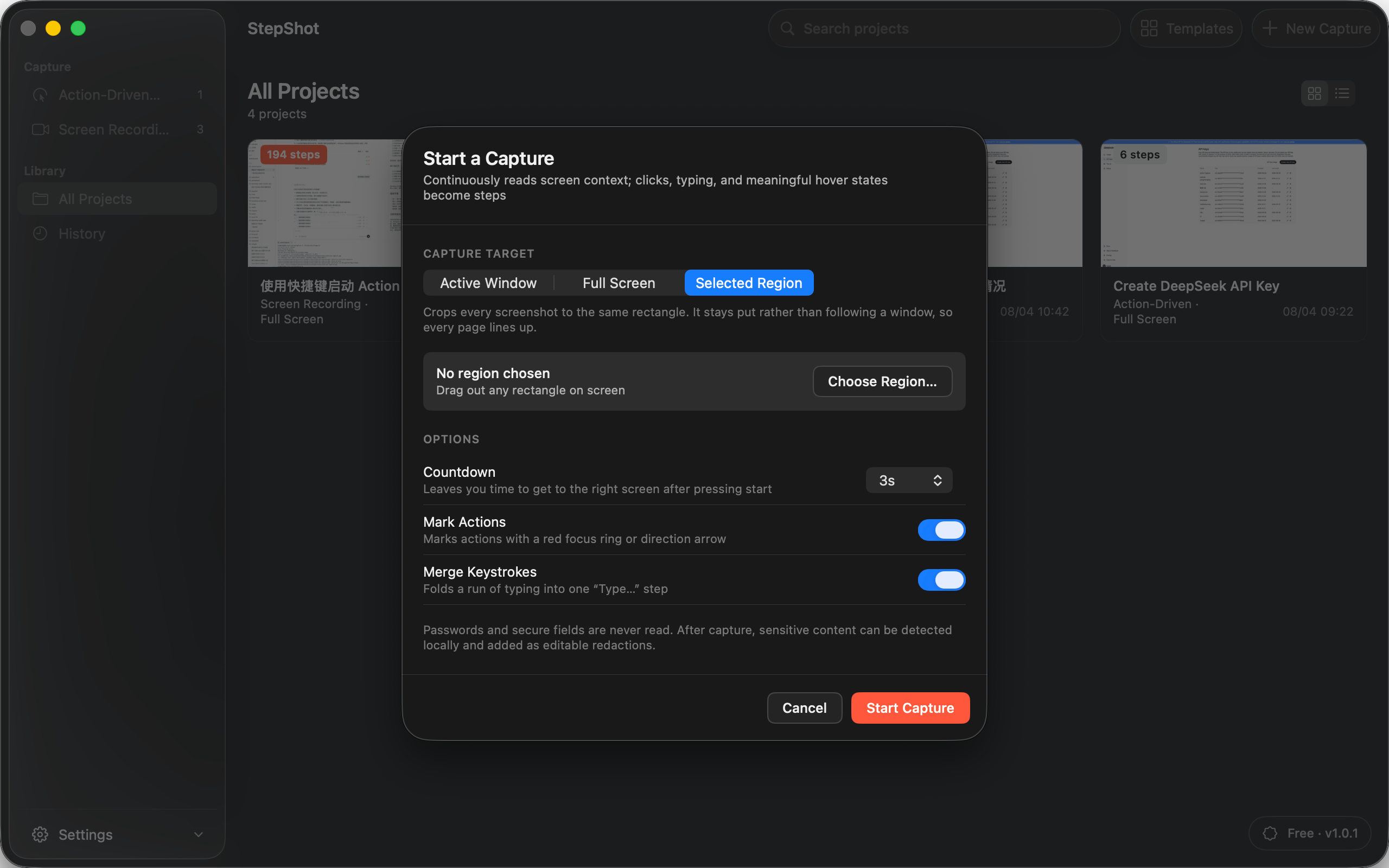
StepShot turns recordings into documents
StepShot is built for the point where a recording should become a document. It captures the workflow, extracts meaningful steps, lets the author refine the result and exports the finished guide to PDF, Markdown or HTML.
The result is still visual, but it is no longer locked inside a timeline.